
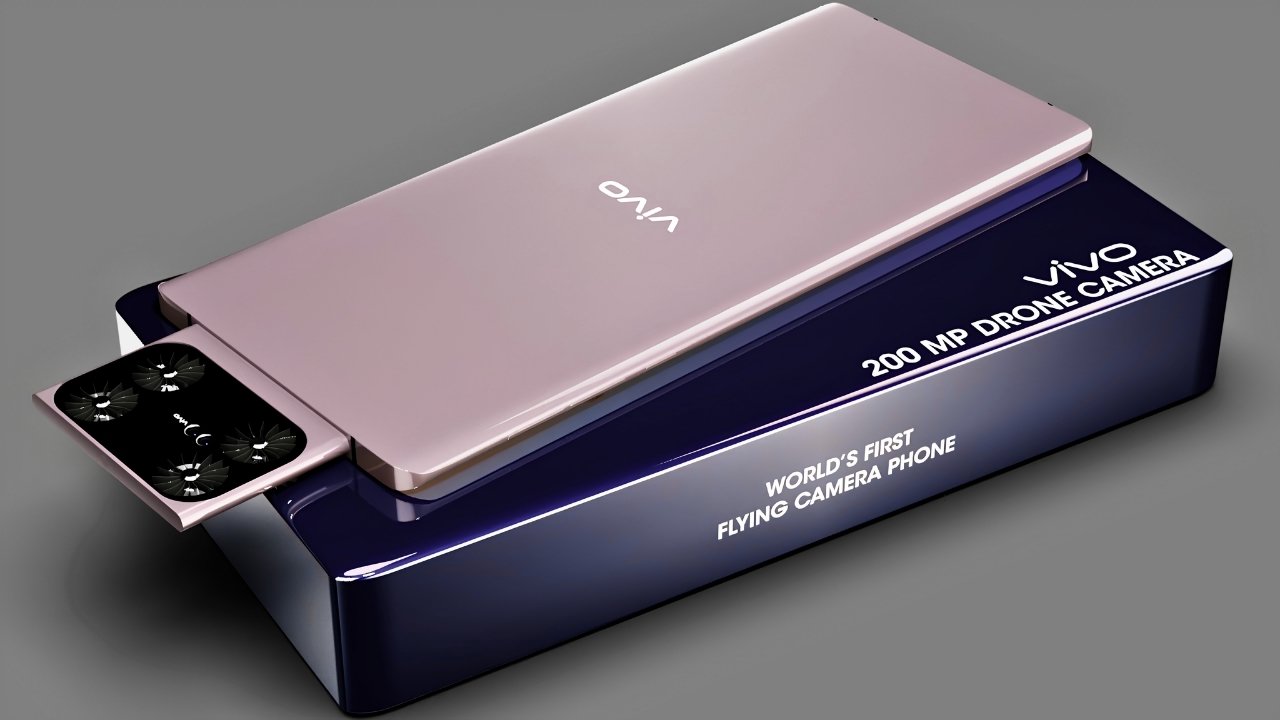
Vivo Flying Camera Phone 2026 The Vivo Flying Camera Phone 2026 represents one of the most futuristic smartphone concepts ever imagined in mobile technology. It introduces a completely new way of capturing photos and videos through a detachable flying drone camera system built directly into the phone. Instead of relying only on traditional rear or front cameras, this device takes photography to the next level by allowing users to fly a mini camera unit in the air for dynamic aerial shots.
With powerful specifications like a 200MP drone camera system, 6000mAh battery, and 12GB RAM, this smartphone concept focuses on combining performance with creativity. It is designed for users who want advanced photography, smooth multitasking, and a futuristic mobile experience that feels far ahead of current technology.

Revolutionary Flying Drone Camera System
The biggest highlight of the Vivo Flying Camera Phone 2026 is its world’s first flying drone camera technology. This small detachable camera module can lift off from the smartphone and fly independently, capturing images and videos from unique angles that were previously impossible with a normal phone.
The drone camera is expected to include advanced stabilization technology, obstacle detection sensors, and AI-assisted flight control. Users can control the flying camera through their smartphone interface, making it easy to track subjects, record cinematic shots, or take aerial selfies.

The 200MP camera sensor ensures extremely detailed and sharp images even when zoomed in. This allows users to capture professional-quality photography without needing separate drones or expensive equipment. The flying camera concept is especially useful for travel photography, vlogging, events, and creative filmmaking.
Design and Build Quality
The Vivo Flying Camera Phone 2026 is expected to feature a sleek and futuristic design that supports both advanced technology and everyday usability. The phone body is likely to be slightly thicker compared to normal smartphones because it must house the drone camera system safely.

The back panel may include a secure docking area where the flying camera rests and charges when not in use. The overall design focuses on minimalism, with smooth edges and a premium finish that reflects Vivo’s modern design language.
Despite its advanced features, the phone is expected to remain comfortable to hold, with a balanced weight distribution. The materials used in construction are likely to include high-grade aluminum and reinforced glass for durability.

Display Experience
The smartphone is expected to come with a large AMOLED display that delivers bright colors, deep blacks, and smooth visuals. A high refresh rate ensures that scrolling, gaming, and video playback feel extremely fluid.
The display also plays an important role in controlling the flying camera. Users can view real-time footage from the drone camera directly on their screen, making it feel like a personal control center for aerial photography.

With high resolution and HDR support, the screen is designed to provide an immersive experience for movies, games, and creative editing tasks.
Performance and Hardware
The Vivo Flying Camera Phone 2026 is powered by 12GB RAM, ensuring smooth multitasking and fast performance across all applications. Users can switch between camera controls, editing apps, games, and social media without lag.

The internal processor is expected to be a high-performance chipset optimized for AI computing, drone control, and camera processing. This is important because managing a flying camera requires real-time data processing and stable connectivity between the drone and the smartphone.
App loading times, system responsiveness, and background task management are all expected to be highly efficient, making the device suitable for both casual and advanced users.

Drone Camera Features and Photography Experience
The drone camera system is not just a gimmick but a fully functional imaging tool designed for creative freedom. It allows users to capture photos from angles that traditional smartphones cannot achieve.
Users can position the camera above crowds, rotate it around subjects, or even capture cinematic tracking shots. This makes it extremely useful for content creators, vloggers, and travel enthusiasts.
The 200MP sensor enhances clarity and detail, allowing images to maintain quality even after heavy cropping or zooming. Advanced AI processing helps adjust lighting, focus, and color balance automatically, ensuring professional-level results.
Video recording capabilities are also expected to be highly advanced, offering stabilized footage and multiple shooting modes such as slow motion, time-lapse, and cinematic tracking.

Battery Life and Charging
The 6000mAh battery inside the Vivo Flying Camera Phone 2026 is designed to support both smartphone usage and drone operations. Since flying a camera consumes additional power, the battery capacity plays a crucial role in maintaining performance throughout the day.
Users can expect long hours of normal smartphone usage combined with moderate drone camera usage. Fast charging technology is likely to be included, allowing the device to recharge quickly when needed.

Smart power management systems help optimize energy consumption between the phone and the flying camera, ensuring balanced performance without rapid battery drain.
Software and User Interface
The software experience is expected to be based on an advanced version of Android with Vivo’s custom UI enhancements. The interface is designed to integrate drone controls directly into the system, making it easy for users to switch between normal phone usage and aerial camera mode.
The user interface may include a dedicated flying camera dashboard, showing battery status, flight altitude, camera angle, and live preview. Gesture controls and voice commands could also be supported for hands-free operation.
Regular updates would improve stability, camera features, and AI performance, making the device smarter over time.
Gaming and Multimedia Experience
Although the main focus of this device is its flying camera system, it also delivers a strong gaming and entertainment experience. The powerful processor and 12GB RAM ensure smooth gameplay without lag or frame drops.
The large AMOLED display enhances gaming visuals, making colors more vibrant and details more immersive. Audio performance is expected to be enhanced with stereo speakers for a richer multimedia experience.
For movie lovers and streamers, the device offers an excellent viewing experience with sharp visuals and smooth playback.
Connectivity and Smart Features
The Vivo Flying Camera Phone 2026 is expected to support advanced connectivity options such as 5G, Wi-Fi 6 or higher, Bluetooth, and GPS. These features ensure fast communication between the phone and the drone camera.
The flying camera likely uses a secure wireless connection to maintain stable control and real-time video transmission. Security features such as face unlock and fingerprint scanning provide safe access to the device.
Additional smart features may include AI scene detection, object tracking, and automated flight paths for the drone camera.
Safety and Practical Considerations
Since the device includes a flying camera, safety becomes an important factor. The drone system is expected to include obstacle detection sensors and automatic return-to-phone functionality to prevent accidents or loss.
The camera module is designed to operate within a limited safe range to ensure user control and environmental safety. These features make the technology practical for everyday use rather than just a concept.
Future of Smartphone Photography
The Vivo Flying Camera Phone 2026 represents a major step toward the future of mobile photography. It introduces a new category where smartphones are not limited to fixed cameras but can extend their capabilities into the air.
This innovation could inspire future devices to include modular camera systems, advanced AI tracking, and fully autonomous imaging tools. It shows how smartphones are evolving from simple communication devices into powerful creative platforms.
Key Highlights
The Vivo Flying Camera Phone 2026 stands out due to its unique combination of innovation and performance. The flying drone camera system with a 200MP sensor brings a new level of photography experience. The 6000mAh battery supports extended usage, while 12GB RAM ensures smooth multitasking and performance.
The device is designed for users who want cutting-edge technology, creative freedom, and powerful hardware in a single smartphone. It combines futuristic design with practical usability, making it one of the most exciting smartphone concepts in the mobile industry.
Final Words
The Vivo Flying Camera Phone 2026 is a bold vision of what the future of smartphones could look like. By introducing a flying drone camera system, it completely changes the way users capture photos and videos.
With strong performance, long battery life, and advanced AI features, this device is designed to deliver a premium and innovative experience. It is not just a smartphone but a creative tool that expands the boundaries of mobile photography.
If this concept becomes reality, it could redefine the smartphone industry and set a new standard for innovation in mobile technology.